Thanks to its prime geographical location in Central Vietnam, Da Nang serves as an unbeatable launchpad for exploring some of Southeast Asia’s most profound historical and natural treasures. Within a radius of just two hours, travelers can journey from the royal dynasties of the Nguyen emperors to thousand-year-old Hindu brick sanctuaries and protected marine archipelagoes teeming with coral gardens.
Whether you have scheduled three days or a full week along the coast, carving out time for regional day excursions will transform a standard beach holiday into an enriching journey through Vietnamese heritage. To map your time effectively, consult our flexible Vietnam itinerary planner and verify seasonal conditions in our Da Nang weather guide before setting off.
1. Hue Imperial Citadel: Royal Palaces, Tombs & Perfume River
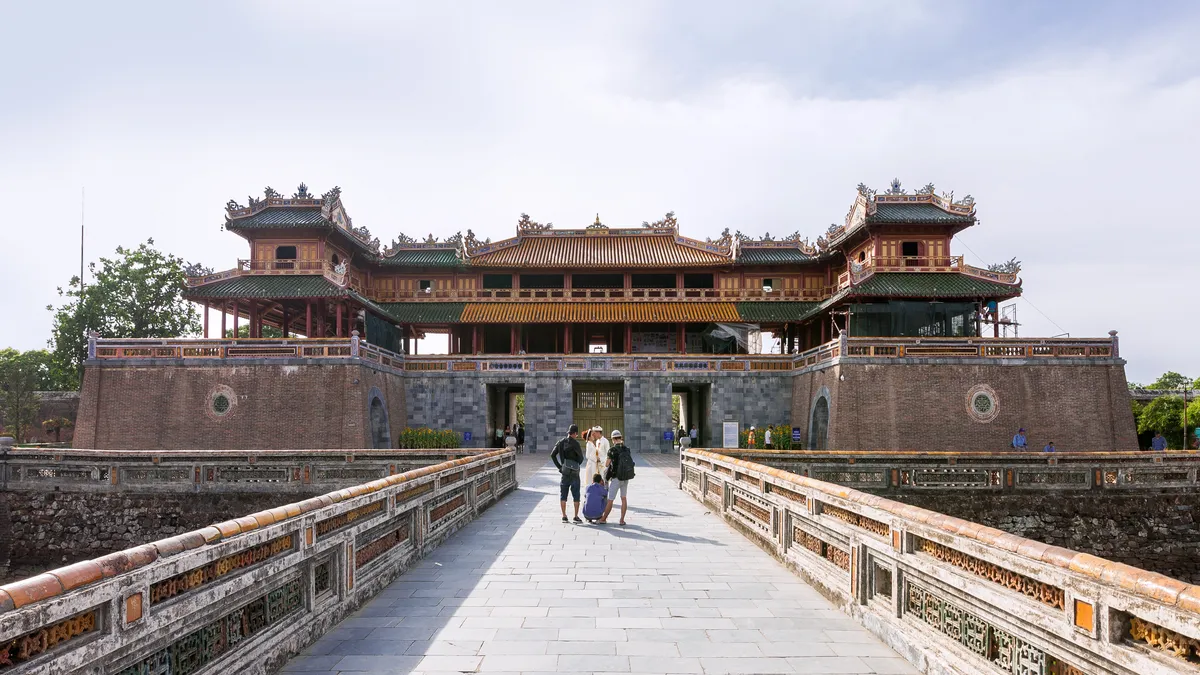
Located approximately 100 kilometers north of Da Nang via the scenic Hai Van Pass or express tunnel, the ancient imperial capital of Hue stands as Vietnam’s royal heartland. As the political capital under the Nguyen Dynasty from 1802 to 1945, Hue preserves an extraordinary collection of palaces, pavilions, moat-encircled fortifications, and royal mausoleums designated as a UNESCO World Heritage Site.
On a full-day trip, your primary stop should be the Imperial Citadel (Dai Noi) and the Forbidden Purple City, entered through the imposing Ngo Mon Gate. Inside, explore the ornate Thai Hoa Palace, the reconstructed ancestral temples, and tranquil lotus ponds. Afterwards, take a traditional dragon boat cruise along the Perfume River toward Thien Mu Pagoda, Hue’s oldest religious sanctuary, followed by a visit to the elaborate Khai Dinh Tomb, famed for its intricate porcelain and glass mosaics.
2. My Son Sanctuary: Exploring the Valley of Ancient Champa Temples
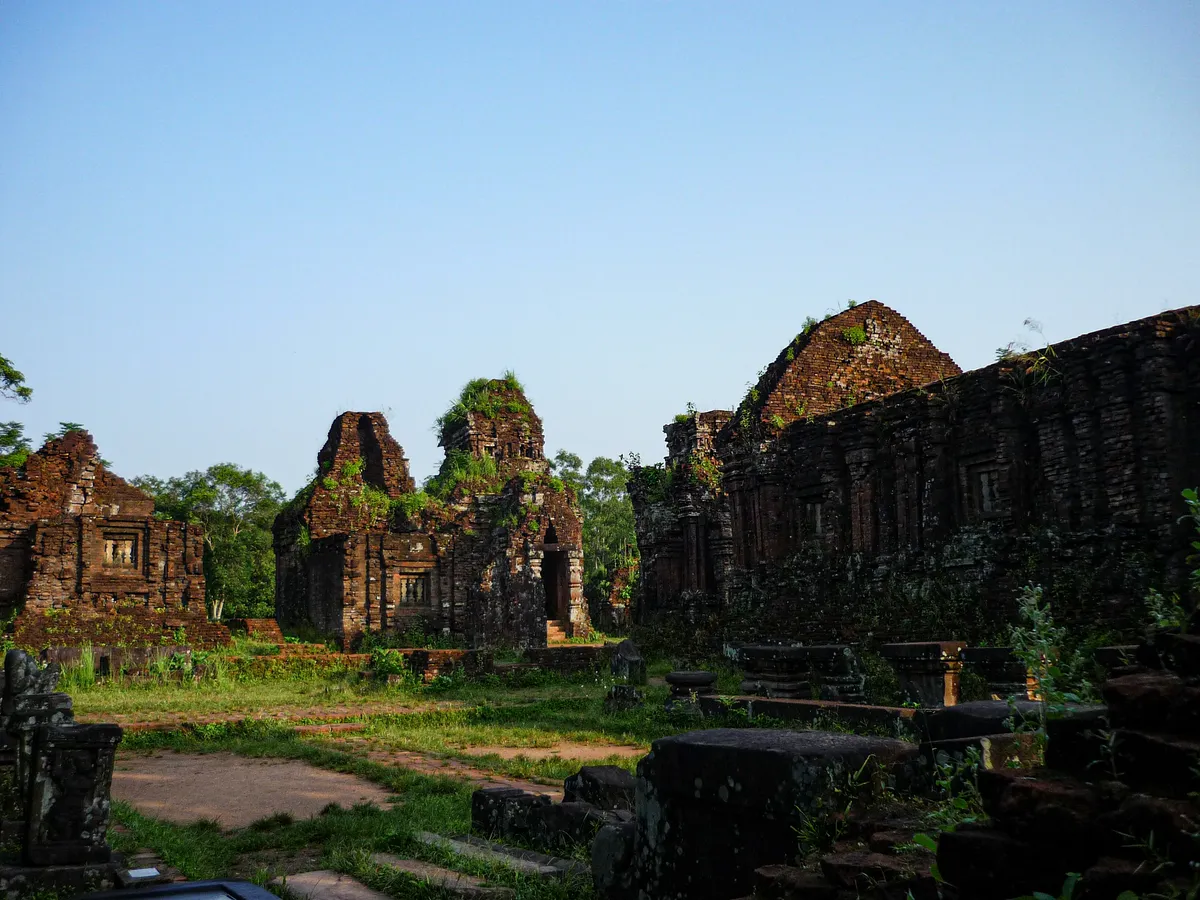
Nestled in a verdant jungle valley surrounded by sacred ring mountains roughly 45 kilometers southwest of Da Nang lies My Son Sanctuary. Between the 4th and 14th centuries, this spiritual cradle served as the religious and political epicenter of the Champa Kingdom, where kings worshipped the Hindu god Shiva and dedicated monumental red-brick temple towers (kalan).
What makes My Son truly remarkable is the enigmatic architectural engineering of the Cham people: towers were assembled with fired clay bricks joined together without visible mortar, resisting centuries of tropical monsoons. Strolling along the wooden walkways among Temple Groups B, C, and D, you will see intricately carved sandstone reliefs depicting Hindu deities, dancing apsaras, and sacred animals. Plan your arrival around 9:15 AM or 2:30 PM to catch the daily traditional Cham dance and musical performances included with your entrance ticket.
3. Cham Islands (Cu Lao Cham): Marine Biosphere and Snorkeling Paradise
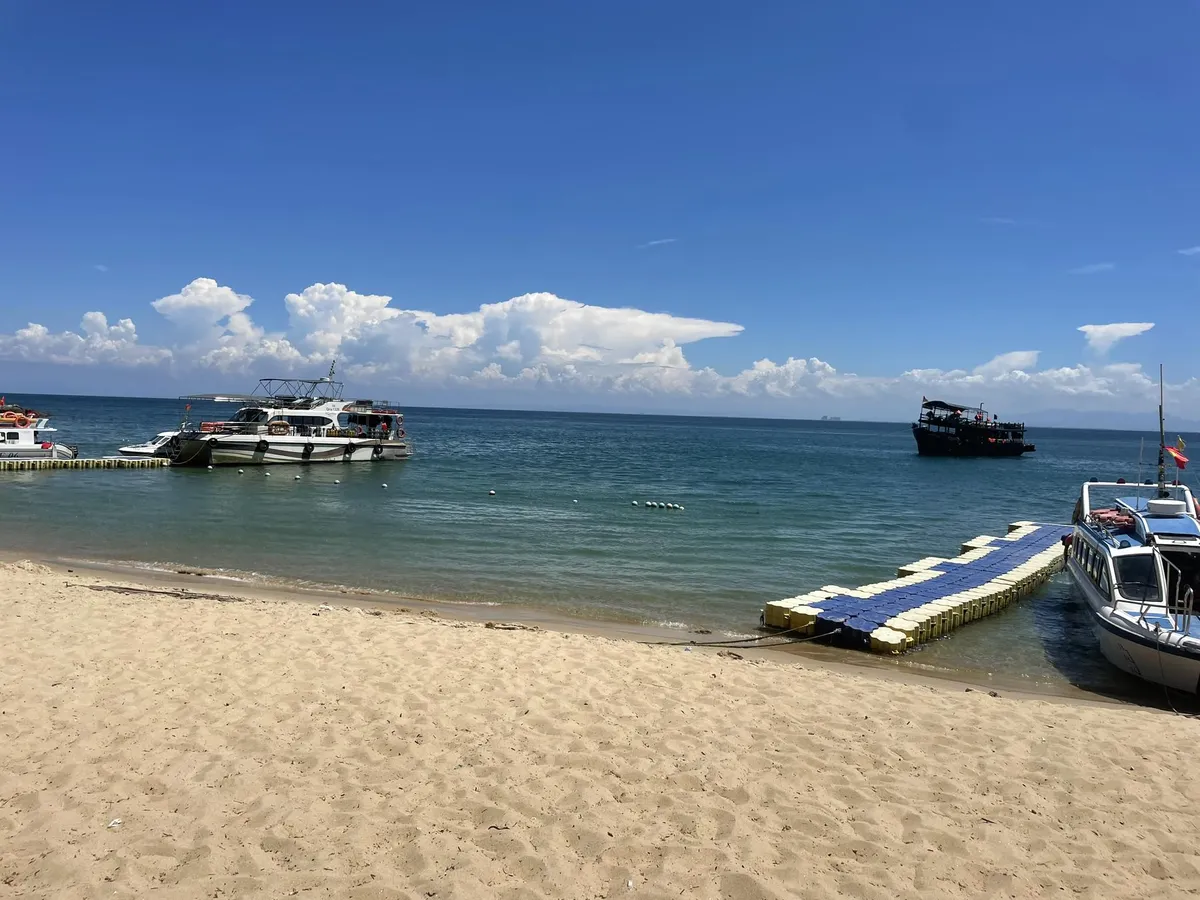
For marine enthusiasts and beach lovers, the Cham Islands (Cu Lao Cham) offer an idyllic offshore escape just twenty kilometers off the coastline. Recognized as a UNESCO World Biosphere Reserve, this cluster of eight pristine granite islands features untouched fishing hamlets, secluded white sand bays, and protected shallow reefs home to over 300 hard and soft coral species.
High-speed speedboats depart daily from Cua Dai pier between 8:00 and 9:00 AM, arriving at the main island of Hon Lao within twenty minutes. Day tour itineraries generally include morning snorkeling or scuba diving among coral reefs at Bai Chong or Bai Xep, followed by a fresh seafood feast at a seaside eco-restaurant and a leisurely walk through the Bai Lang fishing village to visit ancient freshwater wells and Hai Tang Pagoda. To estimate overall tour and activity expenses, review our detailed guide to Da Nang travel costs.
4. Planning Your Day Trips: Guided Tours vs. Independent Travel
Deciding between independent exploration and organized group tours depends heavily on your travel priorities:
- Hue: Best explored via private car or small-group tour. The scenic drive over the Hai Van Pass and around Lang Co Lagoon is unforgettable. Taking the historic train from Da Nang to Hue is another scenic, relaxing alternative.
- My Son: Highly recommended to visit in the early morning (departing Da Nang by 7:00 AM) to avoid midday heat and large tour buses. A guided tour provides invaluable historical context regarding Champa civilization.
- Cham Islands: Because independent speedboats are strictly regulated by maritime border authorities, booking a licensed day tour with round-trip transfers and marine park permits is the most hassle-free approach. Note that boat tours operate primarily during the dry season (March through September).
For more inspiration on regional sights and attractions, explore our curated list of top things to do in Da Nang.
Frequently Asked Questions About Day Trips from Da Nang
Can I visit both Hue and Hoi An in a single day from Da Nang?
While technically possible, it is strongly discouraged. Hue and Hoi An lie in opposite directions; cramming both into one day results in over five hours of transit, leaving very little time to appreciate either historic destination.
What is the best way to travel from Da Nang to My Son Sanctuary?
Hiring a private Grab car or booking an early-morning half-day tour is the most convenient option. Driving a motorbike takes about 1.5 hours each way along national highways.
Are the Cham Islands open to visitors all year round?
No. Tourist speedboats to the Cham Islands typically operate from March to late September when sea conditions are calm. From October to February, rough waves and monsoons generally halt boat services.